Liberation-Focused & Anti-Oppressive

Virtual trauma Therapy in California

Your living truth

You may carry not only your own experiences, but also the histories, survival strategies, and wisdom passed down through your lineage. At the same time, you may be navigating the ongoing demands of acculturation, assimilation, code-switching, and conformity within systems that were not created with your full humanity in mind. The pressure to constantly adapt, perform, prove, or make yourself more acceptable can take a toll. It may show up as hypervigilance, internalized racism, low self-worth, imposter syndrome, cultural disconnection, or the feeling that you have to leave parts of yourself behind in order to belong. From a liberation-focused perspective, these experiences are not simply personal struggles or individual shortcomings. They can be understood as responses to the conditions you have been asked to survive. Therapy can offer space to slow down, listen to what your body and spirit have been carrying, and question the messages that taught you that you must become smaller, quieter, more productive, or more acceptable to be worthy of belonging. You can begin to honor what has been passed down, recognize the ways you have survived, and make room for rest, self-trust, wholeness, and a fuller sense of freedom.

What Does Liberation-Focused Therapy Mean?

Liberation-focused therapy has deep roots in Black liberation theology, womanism, and Black feminism, emerging from histories of racial violence, oppression, and resistance. The work of thinkers such as Tricia Hersey and the Nap Ministry has helped bring these ideas into conversations about rest, embodiment, and reclaiming our humanity from systems that demand constant productivity.
As a second-generation Asian American therapist, I draw inspiration from these traditions while honoring that liberation-focused work comes from Black liberation movements and histories, not from the Asian American experience. I also make space for the particular ancestral histories, cultural experiences, and forms of oppression that shape Asian American lives.
In our sessions together, we question the messages that tell you to always be productive, successful, accommodating, or self-sacrificing. It means exploring what it might look like to rest, set boundaries, reconnect with yourself, and experience your humanity without having to earn it.

What is an Anti-Oppressive Approach to Therapy?

An anti-oppressive approach means we don’t look at your struggles as if they exist only within you. Our families, cultures, identities, communities, and the systems around us shape how we see ourselves, what feels safe, and what we believe we need to be.
The therapy process can look like decolonizing ours mind, questioning the pressure to constantly achieve and produce, making space for rest, and noticing the messages we’ve absorbed about our worth. It can also mean reconnecting with your own voice, choices, and sense of agency.
Instead of only asking, “What’s wrong with me?” we also question:
“What happened to me?”
“What was I taught to believe?”
“Which beliefs are actually mine?”
“What am I carrying that was never mine to carry?”
“What would it mean to live with more freedom?”
Healing means slowing down, resting, questioning what you’ve been taught, reclaiming your voice, and feeling more empowered to choose how you want to live.

Moving Beyond Shame & Self-Blame

Trauma survivors often carry the belief that something is wrong with us. You may blame yourself for staying, feel ashamed of how you responded, or wish you had handled things differently.
A liberation-focused approach invites us to pause the self-blame and get curious about what you were surviving and what your body was doing to get you through it. Your responses didn’t happen in a vacuum. They made sense within the circumstances you were living through.
Healing doesn’t mean fixing yourself or becoming more resilient for the sake of surviving more. Healing means slowing down, making space to rest, releasing shame, and reconnecting with the parts of yourself that had to go into survival mode.

Reclaiming Your Voice, seeing your Needs

Part of healing is also learning to recognize what you actually want and need.
So many of us have spent years attending to other’s needs, maintaining harmony, or avoiding taking up too much space.
Our sessions together can help you reconnect with:
  • Your needs
  • Your boundaries
  • Your values
  • Your voice
  • Your identity
  • Your sense of agency
And acknowledging that this is far from being selfish or from rejecting the people you love. Rather, you get to develop the ability to make choices that are aligned with who you are, rather than being driven entirely by fear, guilt, shame, or external expectations.

Liberation & Trauma Therapy

A liberation-focused perspective can be particularly meaningful when working through trauma. Trauma can affect the way we understand ourselves, relationships, our bodies, and our worth. But the context surrounding the trauma matters too.
I work with adults navigating experiences including:
  • Childhood trauma
  • Sexual abuse
  • Domestic and intimate partner violence
  • Racial trauma
  • Intergenerational trauma
  • Family and relational trauma
  • Identity-based experiences of discrimination or rejection
We can explore both what happened to you and the larger context in which it happened.

LGBTQ+ Affirming Therapy with Liberation and anti-oppressive approach

A liberation-focused, anti-oppressive approach recognizes that the shame and struggles you may carry don’t exist in a vacuum. Rejection, discrimination, family expectations, religious or cultural messages, and pressure to conform can teach us to question ourselves, hide parts of who we are, or believe we need to change to be accepted.

Therapy can be a space to unlearn those messages and question the systems and expectations that taught you to shrink yourself. We can explore internalized homophobia, shame, identity conflict, and the exhaustion of having to hide, explain, perform, or make yourself more acceptable to others.

You are not the problem to be fixed. Your identity does not need to be corrected, justified, or made easier for other people to understand. Healing can be about reclaiming your voice, reconnecting with yourself, making space for rest and pleasure, and finding more freedom to live as your whole self.

You deserve belonging without having to abandon yourself to find it.

Asian American & Cultural Identities to explore

For Asian American clients, therapy can make space for the ways culture, family, race, intergenerational experiences, perfectionism, people-pleasing, and belonging can all intersect.
You may have noticed feeling pulled between cultural and family expectations and your own needs, values, and sense of self. Maybe you’ve learned to be the good child, work hard, keep the peace, or put others before yourself. You may be tired of carrying the pressure to achieve, accommodate, or make everyone else comfortable.
Therapy can be a space to question what you’ve been taught, unlearn what no longer serves you, and reconnect with what feels true to you. This isn’t about choosing between family and yourself. It’s about making room for your own voice, boundaries, rest, and freedom while honoring the complexity of where you come from.
You don’t have to abandon your culture to become yourself. And you don’t have to abandon yourself to belong.

Your Identity Matters in Therapy

You don’t have to leave parts of yourself at the door when you come to therapy.
Your race, culture, gender, sexuality, family, relationships, ancestral history, and lived experiences are all part of your story. You don’t have to separate them, make them smaller, or explain them away to make yourself easier to understand.
Therapy can be a space to explore the ways racism, racial trauma, cultural expectations, family patterns, LGBTQ+ identity, and the pressure to belong have shaped how you move through the world. It can also be a place to reconnect with the parts of yourself you’ve had to silence, hide, or push aside to survive, fit in, or keep the peace.
There is no right way to be yourself. You don’t have to perform, assimilate, or become more acceptable here. We can make space to question what you’ve been taught, unlearn what no longer serves you, rest from the pressure to be everything for everyone, and reconnect with what feels true.
You get to bring your whole self into the room. Your complexity, your history, your culture, your contradictions, your joy—all of it belongs.
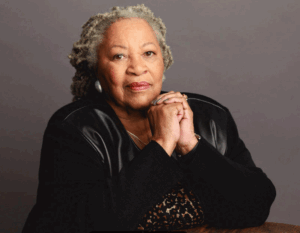
"All water has a perfect memory and is forever trying to get back to where it was."
Toni Morrison
Writer

Space to Rest, Resist & Reclaim

Our sessions together provides you a space to give voice to your unique story, explore your family and ancestral history, connect with ancestral knowledge, recognize your resilience, and reclaim a sense of belonging within yourself.

My work with you supports greater awareness of the patterns that have shaped your life and helps you explore which patterns you want to continue, transform, or release. Together, we can identify internalized oppressive beliefs, interrupt harmful generational patterns, strengthen your connection to your identities and cultural wisdom, and move toward your own authenticity, self-compassion, empowerment, and community liberation.

Your Story

Exploring Family History

with Compassion

 Intergenerational trauma healing is not only about identifying trauma or focusing on what went wrong. Our work together will involve exploring your family history through a more curious, creative, and compassionate lens.

Understanding the historical, cultural, and social circumstances that shaped your ancestors can help you recognize the complexity of their experiences without excusing harm or minimizing its impact on your life. This process may allow you to develop greater compassion for yourself and previous generations, understand how survival strategies were passed down, and make choices with intentions about what you decide to carry on.

Through our work together, healing become an opportunity to honor your roots and ancestry, while creating your own path authentic to your truth. You can acknowledge your ancestral history without being defined by it. You can honor your survival while reclaiming your innate right to thrive.

How I can help you...

My approach integrates Brainspotting and Eye Movement Desensitization and Reprocessing (EMDR), along with Liberation Psychology, Critical Race Theory, identity and belonging work, and exploration of the intersections of culture, race, gender, and sexuality. I incorporate somatic awareness, mindfulness, and self-compassion to help you notice how stress and trauma can be held in the body, while creating space to process traumatic experiences and develop greater awareness of the patterns you learned or inherited.
You and I will explore how trauma, racism, oppression, family patterns, cultural experiences, and identities may shape the way you see yourself, relate to others, and experience your body and emotions. 
Our sessions together help to put language to your experiences, understand intergenerational and learned patterns, challenge internalized oppressive beliefs, and reconnect with your identity and sense of belonging. I support you in developing greater self-compassion, resilience, agency, and liberating yourself to live more authentically—while reclaiming the parts of yourself, your culture, and your story that may have been silenced
Healing isn’t about becoming someone else. It’s about creating more space to be fully yourself.
Brainspotting Trauma Therapy
Schedule a free 15 minutes phone consultation
619-719-5567
angel@crescentshorespsychotherapy.com
I live and work on unceded land of Kumeyaay Nation.
To learn more and join me in supporting Indigenous communities,
visit Native Governance Center, Museum of Us, and Native Lands.